Let’s Talk About Low Libido (Low Sex Drive) in Women—and How to Increase It
First published 21th dec, 2023. Updated 27th June, 2025.
16 minute read
When you’ve lost your sexual desire it’s easy to feel like it’s only you—but it’s not. Around 1 in 3 women experience this. This comprehensive article looks at 19 possible explanations for a lowered libido in women—and practical ideas for sparking it again. All from a sex therapist with a Master of Science in Sexology, who specializes in low desire,
Because you can get that spark back—even if it feels like it’s been gone forever.
In this article:
- The Key to Reawakening Your Sexual Desire
- Asking Yourself Why You’re Not Interested in Sex?
- What’s Behind Low Libido in Women?
- Biological & Medical Influences on Libido
- Psychological Reasons for Low Sex Drive in Women
- Relationship Factors That Cause Low Desire in Women
- Cultural Causes of Female Low Sex Drive
- Final Thoughts: You’re Not Broken
The Key to Reawakening Your Sexual Desire
As a clinical sexologist, I often support women who are puzzled by their drop in sexual interest. They often feel overwhelmed, guilty, or begin questioning their whole relationship.
They’ve usually already tried the usual tips to get things going again: romantic dinners, massage oils, sex toys, surprise getaways, and exciting new positions—yet none of it seems to work.
Maybe, they’ve even tried Bremelanotide, an injection approved to increase desire in pre-menopausal women, yet studies show it has underwhelming results and pretty bad side effects.
It makes perfect sense none of the above have helped.
Because the things going on around you—like a hectic home life or little ones with boundless energy—and within you—like health worries or insecurities about performance—all play a part in your libido.
This is why regaining your sexual desire must start with figuring out why it drifted away to begin with. Because it’s not just a switch you turn on—it’s a feeling you need to learn to cultivate again.
If you’re ready to explore what’s going on underneath the surface, grab my free tool, The Desire Test—it helps uncover all the possible contributors to your low sex drive and gives you a solid starting point.
Asking Yourself Why You’re Not Interested in Sex?
If the question, “Why don’t I want sex anymore?” keeps popping up—here’s a crucial thing to understand: desire rarely disappears for just one reason.
Many of us grew up believing that libido is a purely physical instict, like hunger or thirst. But as a therapist focused on sexual desire, I know that’s far from the truth. Biology is only one part of a much bigger picture.
Your emotions, relationship dynamics, and even the culture around you also influence your sex drive.
And the good news? Understanding these influences helps you reclaim your desire. It puts you in the driver’s seat—because when it’s more than just hormones, there are tangible things you can actually begin to shift.
When desire fades without warning, many of us start grasping at random solutions. In the hopes that one of the things we try will be the missing puzzle piece. But the thing is, when we do this, more often than not, we end up throwing spaghetti at the wall, seeing what will stick. ‘
And when the sex-spaghetti doesn’t work—it can feel deeply disheartening.
Before long, you’re stuck in a loop of disappointment, confusion, and even resentment. And if you were worried something was wrong with you before, it starts to feel like the only possible explanation now.
What’s needed isn’t another “quick fix.” What’s needed is understanding. And that’s exactly what this guide aims to give you.
What’s Behind Low Libido in Women?
Sexual desire is complex—usually shaped by a mix of biological, emotional, relational, and cultural influences. To understand your own libido, it helps to look through all four lenses:
- Biological & Medical Causes
- Psychological Influences
- Relationship Dynamics
- Cultural Influences
Biological & Medical Influences on Libido
Let’s begin with some of the most common physical or health-related reasons behind a sudden decrease in libido in women (or a decrease over time).
1. Living with a Long-Term Illness
Ongoing health conditions—such as diabetes, hypertension, or thyroid issues—are known to affect sexual desire.
Solution: Along with seeking help from your doctor, a sex therapist can help you navigate intimacy despite your health-related limitations. Chronic illnesses don’t have to mean saying goodbye to sex and desire.
2. Medication Side Effects
Medications like antidepressants often cause unwanted side effects. Female low libido is frequently linked to SSRIs, SNRIs, and more.
Solution: Ask your doctor about alternatives like Bupropion or Mirtazapine that may have fewer sexual side effects. Never stop taking medication without the supervision of a doctor.
3. Hormonal Birth Control
Hormonal contraceptives can affect libido for some, but not all. If you noticed a change upon starting your contraceptive, and it’s still affecting your desire negatively three months in, you’re likely not imagining it.
Solution: Discuss non-hormonal options with your doctor, such as an IUD.
4. Pregnancy and Postpartum
Hormonal shifts, exhaustion, and emotional overwhelm can all impact desire. And when you’re spending all your waking time taking care of a baby, it’s no wonder you don’t fancy sex.
Solution: Acknowledge the toll your pregnancy and postpartum have taken, and are still taking, on your body. The biological pieces will resolve themselves with time, but in the meantime, try practising self-compassion, especially if you’re struggling with things like body-image.
Because it’s easy to look in the mirror and zero in on everything that’s changed. But instead of thinking, “God, my stomach looks awful,” try reminding yourself, “This stomach made a whole human.” It might feel awkward at first, but over time, shifting how you talk to yourself can change how you feel in your body—and that comfort is often the first step toward getting your desire back.
5. Menopause and Perimenopause
Many women experience low libido during midlife. Reduced oestrogen may lead to discomfort during sex, thus causing a potential sudden loss of libido in women. Because it’s hard to want sex that’s not pleasurable(!).
Solution: Hormone replacement therapy might be a good option for you to make the vaginal tissue less dry and frail. Speak to your doctor about the various options out there.
Psychological Reasons for Low Sex Drive in Women
Psychological causes of low libido are incredibly common. These seven show up regularly in my work—and each of them is both normal and entirely workable.
1. You don’t know what you like sexually
Not knowing what turns you on is one of the most common reasons for low desire. And honestly, it makes perfect sense—why would you want sex if you’re not sure what’s enjoyable about it?
Solution: Take time to explore your sexuality without pressure or performance. This could be reading erotica, watching something sensual, or simply paying attention to what feels good when you’re alone.
This kind of curiosity helps you understand what sparks arousal for you—and gives your desire something concrete to build from. There’s no right or wrong here—it’s about discovering what genuinely excites you.
2. You’re not present during sex
Sex is as much mental as physical. When your mind is distracted—by work, performance worries, or even thoughts like “I should be enjoying this more”—your body tends to check out too.
Solution: Mindfulness during sex can help you stay in the moment. It’s not about forcing yourself to feel a certain way (or doing deep breathing during the act!)—it’s about gently guiding your attention back to your body and your senses. Practising outside the bedroom helps too: short daily mindfulness exercises (even 5 minutes) can improve sexual presence and pleasure over time.
3. You’re stressed (who isn’t?)
Chronic stress tells your body that now isn’t a good time for sex—and your libido (often) listens. Even if you mentally want to feel desire, your body might be stuck in fight-or-flight mode.
Solution: Try incorporating stress-reducing practices into your daily life. This could be mindfulness, yoga, deep breathing, or simply taking 10 minutes without screens or responsibilities where you take in your environment. Creating a small sense of calm in your nervous system helps your body feel safer—which is essential for desire to return.
4. You feel low or anxious
Depression, anxiety, or emotional numbness often go hand-in-hand with low libido. When you’re emotionally disconnected or overwhelmed, it’s hard to feel sexual desire.
Solution: The first step is acknowledging how you’re feeling without judging yourself (which can be easier said than done). Then, try finding gentle ways to connect to those feelings—through journaling, talking to someone you trust, or seeking therapy.
When you learn to listen to your emotions (rather than shutting them down), it opens the door for reconnection—with yourself and your sexuality. My free resource A Manual for Emotions, is a great starting point.
5. You feel unattractive
Struggling with body image is a huge—and incredibly common—barrier to sexual desire. If you don’t feel desirable, wanting sex can feel out of reach. It can be hard to let go, feel sexy, and get out of your head.
Solution: Start by noticing how you talk to yourself about your body. Would you speak to a friend that way? Begin to replace critical thoughts with more compassionate ones—even if they feel awkward at first.
CBT (Cognitive Behavioural Therapy) techniques can help rewire unhelpful thought patterns and improve both body image and sexual confidence. And no, you don’t need to “love your body” to feel desire—just learning to accept and respect it is a powerful shift.
6. You’re experiencing other sexual difficulties
When sex is painful, or orgasms feel out of reach, it’s only natural for desire to take a back seat. Frustration or fear can build up, creating a cycle where sex starts to feel more like a chore than something pleasurable. Desire thrives on knowing something great is ahead—and disappears when it knows there isn’t..
Solution: Address the physical issues first. Pain should never be ignored—book an appointment with a gynaecologist to get clarity. If it’s more about orgasmic difficulty, consider experimenting with what feels good without the pressure of performance. Educating yourself (and maybe your partner) can also make a big difference—check out my blog posts on difficulty orgasming for support.
7. You’re affected by past trauma
Sexual trauma has a deep impact on overall well-being, as well as desire—and that’s not a sign of brokenness. It’s your nervous system protecting you. Moving on can take time, but it is absolutely possible, even if it may not feel that way right now.
Solution: Seek out a trauma-informed sex therapist or counsellor who can help you work through the layers safely. Recovery isn’t linear, but each step you take builds safety and trust in your body.
Reclaiming your sexuality after trauma can be hard to do alone—and you deserve support along the way. For extra guidance, my blog post Can sexual desire be restored? offers real strategies and reassurance.
WANT YOUR SEX DRIVE BACK?
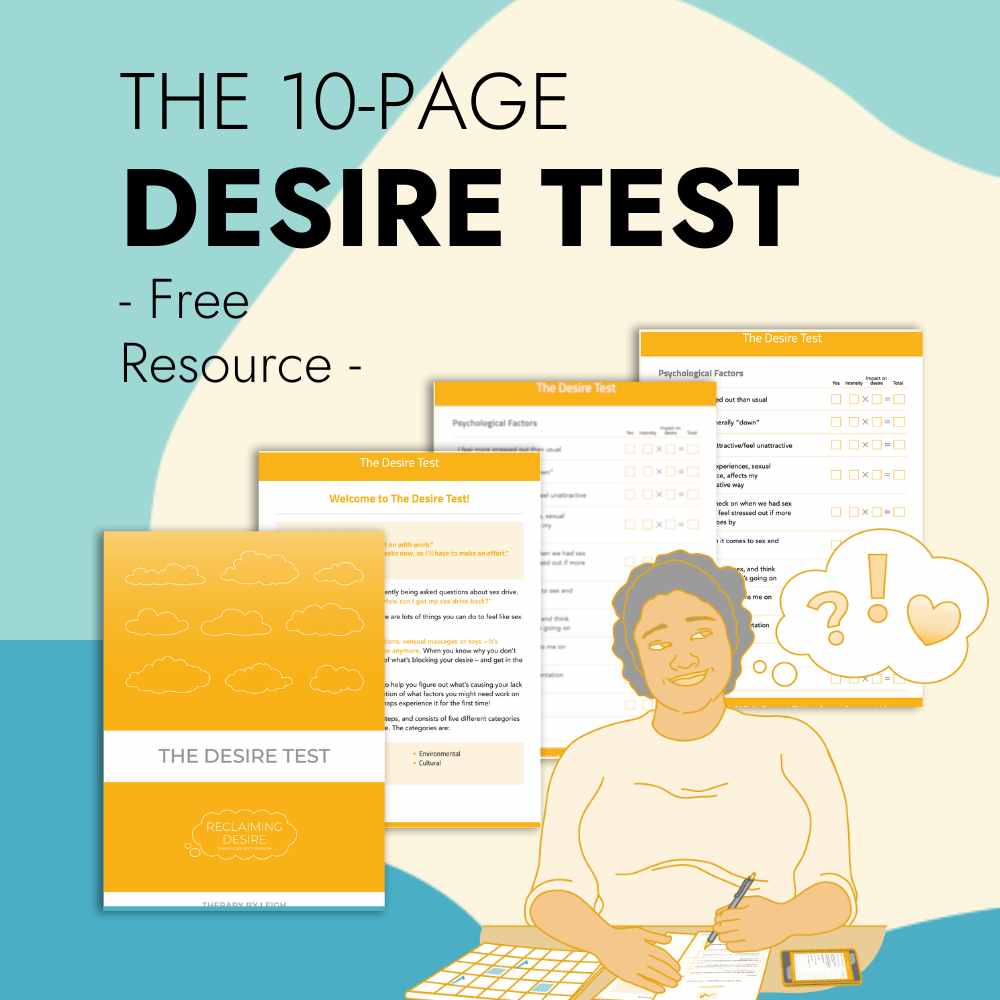
My free resource The Desire Test helps you take that first step towards an increased sex drive, by understanding your decreased desire.
Take the 10-page assessment quiz, get the answers you need to understand what’s standing in the way of your desire, and get free sex and relationship tips directly to your inbox. You can unsubscribe at any time.
Relationship Factors That Cause Low Desire in Women
Just because your sex drive has dropped doesn’t mean your relationship is in trouble—or that desire won’t return. But it does mean it’s worth taking a closer look at your connection. Because often, the way we relate to our partner has a direct impact on how much we feel like having sex.
1. You’re having sex to keep the peace
If you’ve ever had sex mainly to avoid conflict or to make your partner happy, you’re far from alone. But this pattern can quietly chip away at your desire (and relationship overall).
Research has found that our reasons for having sex can influence libido—in both helpful and harmful ways.
When we have sex to connect or feel close, desire often increases. But when we use sex to dodge arguments or tension, it tends to backfire—even though that’s literally what we’re trying to avoid.
Over time, ot can have sex feeling like a task, or worse—something we resent or dread. In some cases, it might even feel violating.
Solution: Clear and open communication around sex is essential if you want to shift out of this cycle. As well as finding ways of reducing the pressure that’s been built up around sex.
My online program Re:Desire gives you tools to stop the pattern of unwanted sex and start creating experiences you genuinely look forward to—because desire thrives when we feel we can say both yes and no. And there are lots of ways to get there!
2. You’re stuck in conflict or miscommunication
Constant bickering or feeling misunderstood can have a huge effect on sexual desire. And so can fighting about sex, too. It’s pretty hard to want sex with someone you’re annoyed with—and that’s completely understandable.
Solution: My free guide Talking Sex includes practical exercises to help reduce conflict and improve sexual communication. It supports you and your partner in specifically identifying misunderstandings—and how to rebuild understanding, closeness, and intimacy.
3. You’ve been together forever
Long-term love might be the dream—but it can also take a toll on libido.
Contrary to popular belief, research by Murray & Milhausen suggests that relationship length impacts women’s sexual desire more than men’s. In fact, studies show desire tends to drop for most people somewhere between six months and two and a half years into a relationship.
So if you’ve been with your partner for a few years, this alone might be influencing your sex drive negatively—and you’re definitely not the only one.
Solution: You don’t need to leave the relationship to feel desire again. It is possible to reignite that spark. Psychotherapist Esther Perel talks about how maintaining your own identity can be key—staying connected to yourself, not just your partner. So you don’t “fuse together”.
My online program Re:Desire also offers practical tools and personalised support to help long-term couples rediscover intimacy and keep the erotic energy alive. Without scheduling sex you don’t want to have.
4. You’re feeling disconnected
When emotional or physical closeness fades, so can desire. A lack of intimacy is one of the most common relationship-based causes of low sex drive in women. And it makes sense, because sex, can feel like an extension of closeness, and if the closeness isn’t there, there’s less reason to have it (or desire it).
Solution: Rebuilding intimacy doesn’t have to be overwhelming. My free tool Intimate Q&A is a great starting point. It offers thoughtful prompts and conversation starters around sex and emotions—designed to deepen your connection and pave the way for desire to grow again.
Cultural Causes of Female Low Sex Drive
Society has a subtle—but powerful—influence on how we feel about sex. It might not be obvious at first, but cultural norms often shape our sense of intimacy and sexuality in ways that dampen desire. That’s why cultural messages are frequently behind low libido in women.
1. You feel shame or discomfort around your desires
What turns us on doesn’t always match what we’ve been taught is “acceptable.” Many grow up with the idea that sex is shameful—especially if your fantasies don’t align with mainstream images of female sexuality.
Sex researcher Justin Lehmiller found that fantasies involving BDSM, group sex or open relationships are incredibly common. But if your fantasies trigger shame, it might be a reason you’re not feeling in the mood for sex.
Solution: Releasing shame is key to reconnecting with desire. My blog post on how shame affects sexual desire & pleasure, offers insight and steps to move forward.
Another great place to begin is mindfulness—not to erase the shame, but to notice it without judgment. There are lots of free guided mindfulness and self-compassion practices on YouTube to help you get started. Over time, this can help you feel safer in your desires—and more open to pleasure.
2. You keep comparing yourself to others
From Instagram reels to romance novels, sex is portrayed as effortless, passionate and endlessly satisfying. When we see that constantly, it’s easy to feel like we’re falling short—or that something’s wrong with us.
The truth? That perfect sex life usually isn’t real. And comparing yourself to it only leads to frustration, disconnection and—you guessed it—lower libido.
Solution: Notice when you start the comparison spiral and pause to question it. Is what you’re seeing actually true? And even if it is, does it reflect your needs or desires? Your sexuality is unique. What works for someone else may not work for you—and that’s not a problem, it’s human.
If you’re ready to stop chasing someone else’s version of sex and build your own, my Re:Desire program is full of tools and 1:1 support to help you reconnect with your own desires and increase libido on your terms.
3. Your upbringing shaped your beliefs about sex
The way we were raised plays a huge role in how we experience sex and sexuality. Many of us carry early messages from family, religion, or school that suggest sex is wrong, shameful, or only acceptable under certain conditions.
If you were taught that sex is something to hide or only appropriate within marriage, it’s not surprising that you now struggle to feel comfortable—or turned on.Shame is a well-known libido-killer.
Solution: Working through these ingrained beliefs takes time and care. Sex therapy is one of the most effective ways to unpack old messages and reframe your relationship with sex. And yes—talking about sex with a therapist might feel intimidating at first, but I promise, nothing surprises us.
We’re here to make these conversations feel normal, safe and judgement-free—because they are.
Final Thoughts: You’re Not Broken
Whether you’re facing a sudden decrease in libido or your lack of desire is something that’s been growing over time, you’re not alone. Even if it may feel that way right now.
If you’ve ever wondered what causes a woman to lose her libido or how to increase libido in women, the answer starts with self-understanding. Not just, what lowers desire for others, but what lowers it for me?
Take the first step toward change—not by forcing desire, but by getting curious about what it needs to return.
Try my Desire Test—and start reconnecting with the part of you that wants closeness and pleasure, again. Because it’s likely still there, you just can’t see it (or find it), right now.
Zero sex drive?
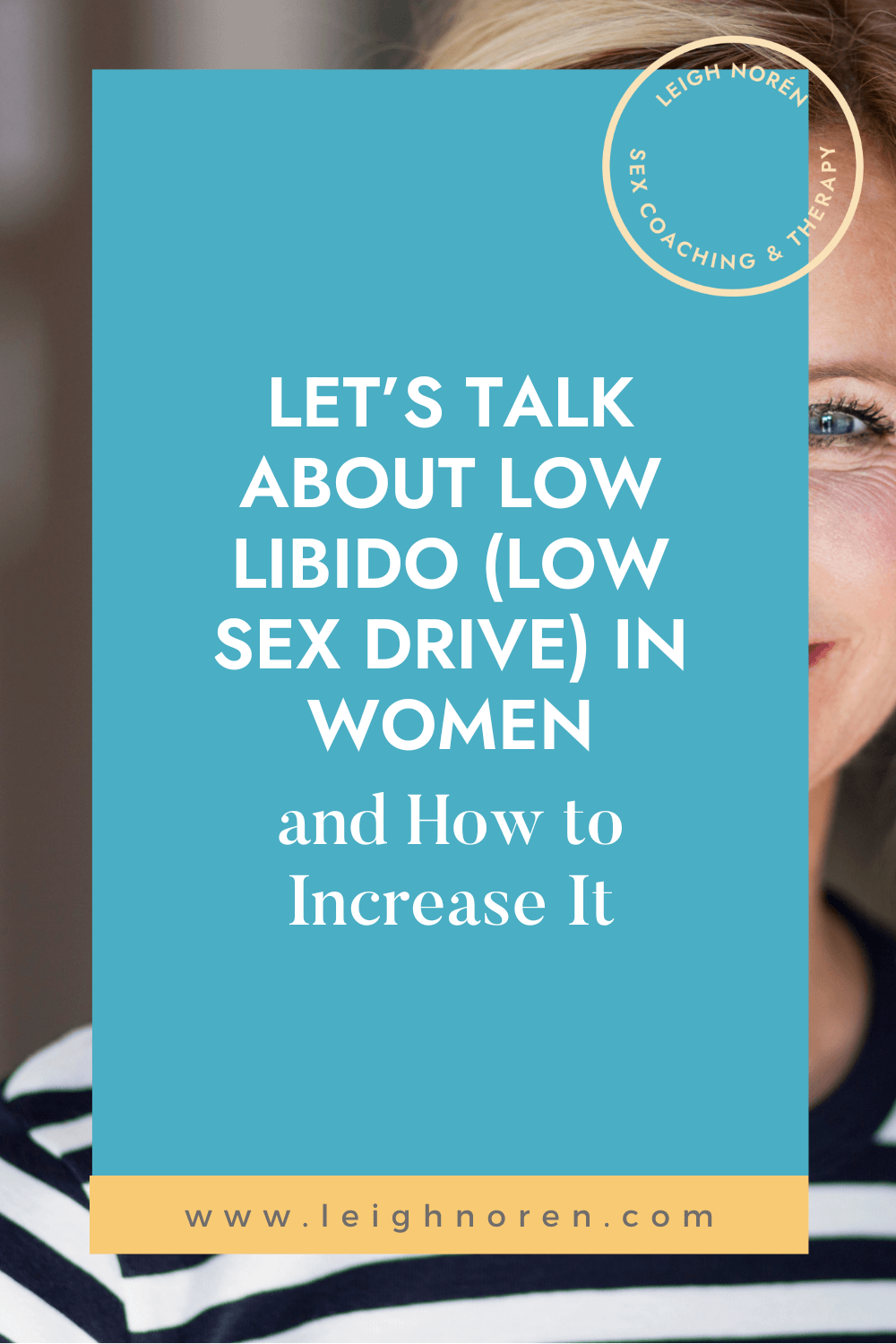
You’re not alone! Download the 10-page Desire Test to find out why your desire for sex is gone (and what to do about it).
Questions based on a variety of factors proven to negatively affect desire

Find out which factors are responsible for your low or non-existent sex drive
Get instant access to expert advice, delivered directly to your inbox when you download The Desire Test. Unsubscribe anytime.
WANT TO KNOW MORE ABOUT THE DESIRE TEST?


With 9 years of experience as a sex therapist and coach - Leigh helps her clients create stress-free, shame-free, pressure-free sex lives, through her unique combination of sexological science, & psychotherapeutic & coaching tools.